Gemstone profile and identification guide

Emerald

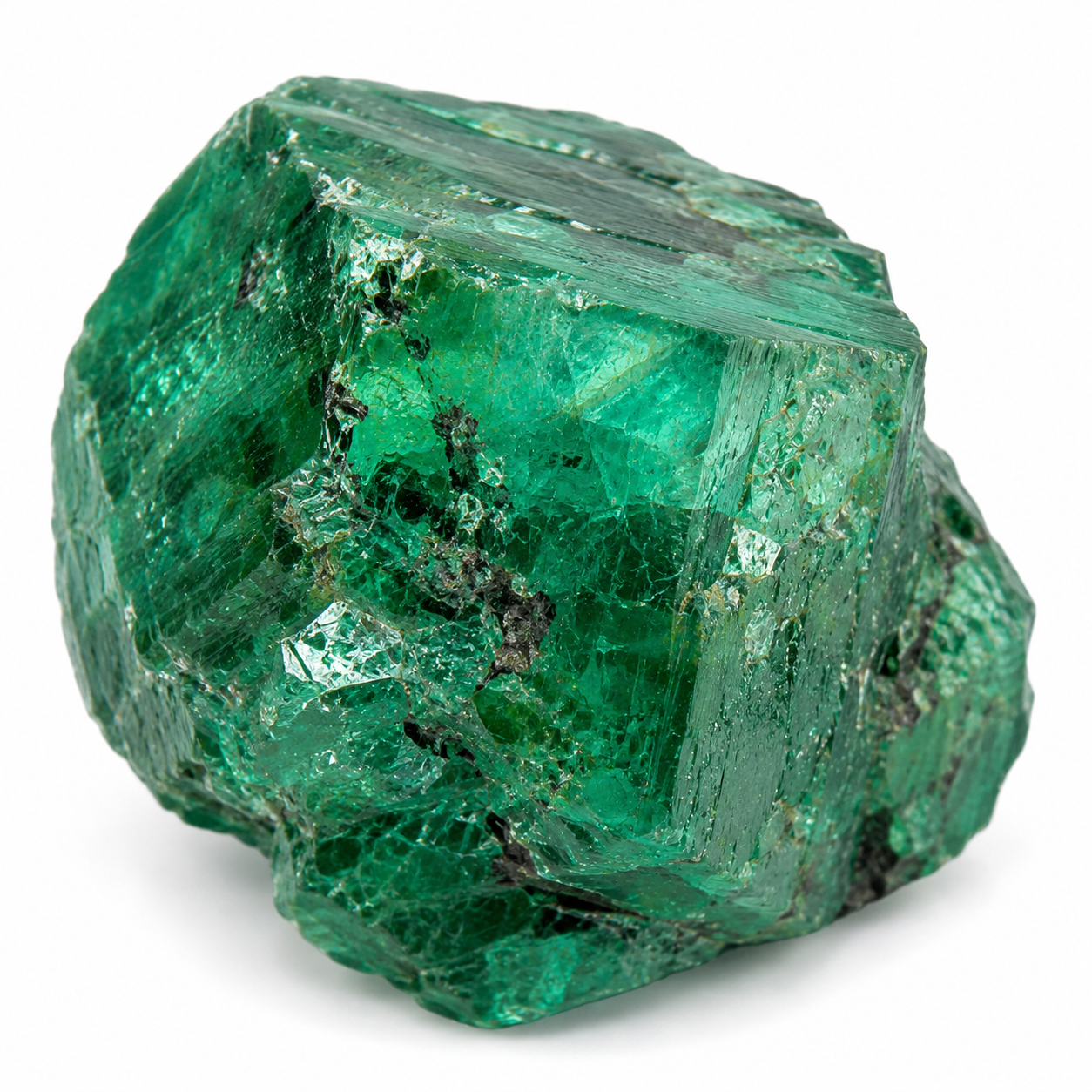
Emerald stands apart from other green gems because colour carries more weight than absolute clarity. Even stones with visible inclusions can be highly regarded when the green is vivid, lively, and unmistakably within the emerald range.

7.5 Mohs Emerald Green, Forest Green Cyclosilicate (Beryl Group)
Emerald

Overview

Emerald stands apart from other green gems because colour carries more weight than absolute clarity. Even stones with visible inclusions can be highly regarded when the green is vivid, lively, and unmistakably within the emerald range.

Did you know? Many emerald crystals form in settings where beryllium-bearing fluids meet chromium- or vanadium-bearing rocks, an uncommon geochemical combination.

Use this profile as a collector reference and educational guide for quick on-page comparison, then validate with the interactive identification system.

Identification

Name: Emerald

Scientific classification: Cyclosilicate (Beryl Group)

Hardness: 7.5 Mohs

Transparency: transparent

Lustre: vitreous

Crystal system: Hexagonal

Primary colour: Emerald Green

Secondary colour: Forest Green

Colour family: Greens

Compare the hue with green tourmaline, tsavorite, and dyed imitations. Emerald usually shows a distinctly beryl-like combination of rich green colour, vitreous lustre, and inclusions that collectors often accept rather than reject outright.

Verification Status

Status: verified-core-fields

Reference priority: GIA, Gem-A, Mindat, International Gem Society

Core identity fields reviewed against consensus gemological references (GIA/Gem-A/Mindat/IGS).

Some market- and locality-level details may still require citation-grade source notes for publication workflows.

Physical Properties

Hardness category: hard

Hardness value: 7.5 Mohs

Chemical composition: Beryllium aluminum silicate with Cr/V chromophores (Be3Al2Si6O18)

Crystal system: Hexagonal

Common locations: Colombia (Muzo, Chivor, Coscuez), Zambia (Kagem), Brazil, Ethiopia, Afghanistan

Learn more: Gem-A gemstone education resources.

Colour Variations

Emerald sits in the greens grouping here, usually reading first as emerald green with forest green appearing as a secondary note or modifier.

Optical effects: Pleochroism

Detailed Gemology

Mineral species: Beryl

Mineral group: Beryl group

Chemical formula: Beryllium aluminum silicate with Cr/V chromophores (Be3Al2Si6O18)

Mohs hardness: 7.5

Crystal system: Hexagonal

Lustre: vitreous

Transparency: transparent

Streak: White

Cleavage: Indistinct basal cleavage

Fracture: Conchoidal to uneven

Specific gravity: 2.66-2.80

Refractive index: 1.57-1.60

Optical phenomena: Pleochroism

Colour range: Emerald Green, Forest Green, Green

Common inclusions: Two-phase fluid inclusions, growth tubes, feathers, and zoning

Geological environment: Granitic pegmatites and hydrothermal beryllium-bearing veins

Principal mining regions: Colombia (Muzo, Chivor, Coscuez), Zambia (Kagem), Brazil, Ethiopia, Afghanistan

Important commercial sources: Colombia and Zambia are principal commercial sources, with additional production from Brazil, Ethiopia, and Afghanistan

Historical significance: Beryl varieties have been used in gems and ornament since antiquity.

Common treatments: Variety-dependent: emerald often clarity-enhanced with oils/resins; aquamarine and morganite are commonly heat treated.

Synthetic or imitation forms: Hydrothermal synthetic emerald and various glass/composite imitations are present in trade.

Common look-alikes: aquamarine, morganite, beryl

Jewellery uses: Emerald is used chiefly for A good fit for collectors and jewellers looking for visible character without needing the highest hardness category.. In the trade it is commonly fashioned as faceted stones, calibrated cuts, and higher-clarity collector pieces, with Mohs hardness 7.5 guiding suitable jewellery applications.

Care recommendations: Avoid ultrasonic cleaners and extreme temperature changes. Clean gently with a soft cloth and mild soap.


Cross-check profile data with GIA Gem Encyclopedia and Mindat entry for Emerald.

Formation

Grown in hydrothermal veins and pegmatites where beryllium, chromium, and vanadium concentrate. Beryl-group material typically develops where beryllium-bearing fluids can circulate for long enough to grow well-formed crystals in pegmatites or hydrothermal pockets.

Origin

Colombia and Zambia are principal commercial sources, with additional production from Brazil, Ethiopia, and Afghanistan

Uses

Best for: Emerald is used chiefly for A good fit for collectors and jewellers looking for visible character without needing the highest hardness category.. In the trade it is commonly fashioned as faceted stones, calibrated cuts, and higher-clarity collector pieces, with Mohs hardness 7.5 guiding suitable jewellery applications.

Ideal uses: A good fit for collectors and jewellers looking for visible character without needing the highest hardness category.

Emerald FAQ

How can I identify Emerald?

Compare hardness (7.5 Mohs), crystal system (Hexagonal), colour profile, and lustre (vitreous) with your sample. Then cross-check related gemstones listed above.

What colour range does Emerald appear in?

Emerald sits in the greens grouping here, usually reading first as emerald green with forest green appearing as a secondary note or modifier.

Where is Emerald commonly used?

A good fit for collectors and jewellers looking for visible character without needing the highest hardness category.. For maintenance, follow the care guidance in this profile.