Gemstone profile and identification guide

Alexandrite

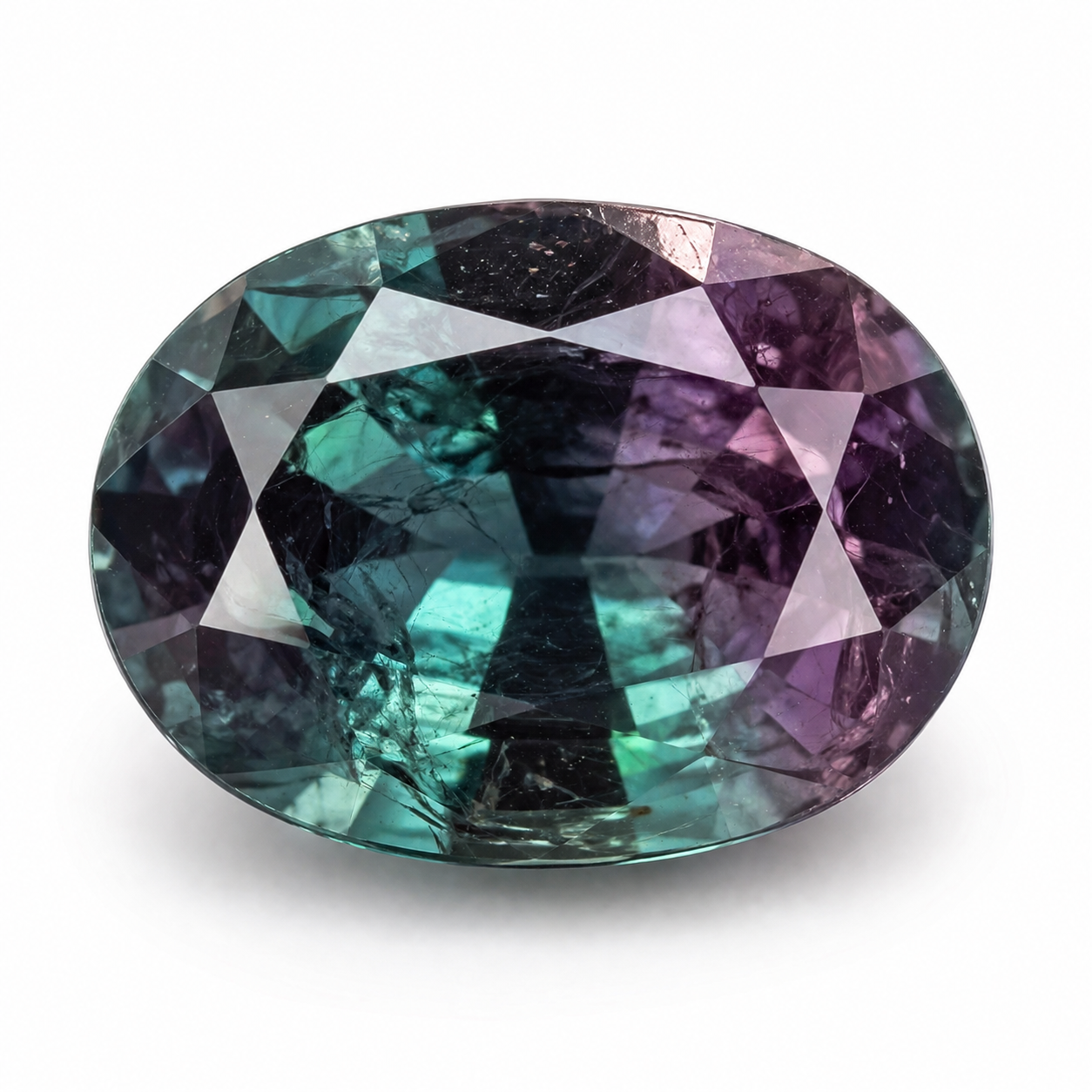
Alexandrite is the colour-change variety of chrysoberyl, typically shifting from green to bluish green in daylight to red to purplish red under incandescent light. Commercial alexandrite is sourced mainly from Brazil, Sri Lanka, and East Africa, with the Russian Urals important historically.

8.5 Mohs Green, Brown Oxide (Chrysoberyl)
Alexandrite

Overview

Alexandrite is the colour-change variety of chrysoberyl, typically shifting from green to bluish green in daylight to red to purplish red under incandescent light. Commercial alexandrite is sourced mainly from Brazil, Sri Lanka, and East Africa, with the Russian Urals important historically.

Did you know? Alexandrite became famous in nineteenth-century Russia, where the red-and-green shift echoed the imperial colours associated with the tsars.

Use this profile as a collector reference and educational guide for quick on-page comparison, then validate with the interactive identification system.

Identification

Name: Alexandrite

Scientific classification: Oxide (Chrysoberyl)

Hardness: 8.5 Mohs

Transparency: transparent

Lustre: vitreous

Crystal system: Orthorhombic

Primary colour: Green

Secondary colour: Brown

Colour family: Greens

The decisive test is the colour shift under different light sources. Compare it with green chrysoberyl, tourmaline, or garnet lookalikes and pay close attention to whether the change is broad and obvious rather than a slight brownish cast.

Verification Status

Status: verified-core-fields

Reference priority: GIA, Gem-A, Mindat, International Gem Society

Core identity fields reviewed against consensus gemological references (GIA/Gem-A/Mindat/IGS).

Some market- and locality-level details may still require citation-grade source notes for publication workflows.

Physical Properties

Hardness category: medium

Hardness value: 8.5 Mohs

Chemical composition: Beryllium aluminum oxide (BeAl2O4)

Crystal system: Orthorhombic

Common locations: Brazil (Minas Gerais), Sri Lanka, Tanzania, India, Russia (historic Ural localities)

Learn more: Gem-A gemstone education resources.

Colour Variations

Alexandrite sits in the greens grouping here, usually reading first as green with brown appearing as a secondary note or modifier. Some specimens also show colour change, which can alter the way the colour is perceived under changing light.

Optical effects: Colour Change, Chatoyancy (rare)

Detailed Gemology

Mineral species: Chrysoberyl

Mineral group: Chrysoberyl group

Chemical formula: Beryllium aluminum oxide (BeAl2O4)

Mohs hardness: 8.5

Crystal system: Orthorhombic

Lustre: vitreous

Transparency: transparent

Streak: White

Cleavage: Distinct in one direction

Fracture: Conchoidal to uneven

Specific gravity: 3.70-3.78

Refractive index: 1.741-1.760

Optical phenomena: Colour Change, Chatoyancy (rare)

Colour range: Green, Brown, Purple, Red, Colour Change

Common inclusions: Needle-like rutile, fingerprint inclusions, fluid inclusions

Geological environment: Pegmatites and metamorphic rocks with chromium-bearing conditions

Principal mining regions: Brazil (Minas Gerais), Sri Lanka, Tanzania, India, Russia (historic Ural localities)

Important commercial sources: Brazil, Sri Lanka, Tanzania, India; classic historic material from the Ural Mountains in Russia

Historical significance: Named in 19th-century Russia and historically associated with imperial Russian jewellery.

Common treatments: Generally untreated; some material may be clarity enhanced.

Synthetic or imitation forms: Flux-grown synthetic alexandrite, colour-change sapphire simulants

Common look-alikes: Colour-change sapphire, garnet-and-glass composites

Jewellery uses: Lapidaries usually cut it to emphasise movement of light, so ornamental objects and statement jewellery are common uses.

Care recommendations: Durable for jewellery; avoid sharp impact along cleavage and avoid harsh thermal shock.


Cross-check profile data with GIA Gem Encyclopedia and Mindat entry for Alexandrite.

Formation

Forms in beryllium-rich pegmatitic and metamorphic environments where chromium is available as a chromophore. Gem-quality crystals are recovered from pegmatites and secondary placer concentrations.

Origin

Brazil, Sri Lanka, Tanzania, India; classic historic material from the Ural Mountains in Russia

Uses

Best for: Lapidaries usually cut it to emphasise movement of light, so ornamental objects and statement jewellery are common uses.

Ideal uses: Best for jewellery and display pieces where colour, pattern, or internal effect matters more than maximum wear resistance.

Care

With Mohs hardness about 8.5, alexandrite is suitable for most jewellery. Avoid harsh impact and steam cleaning of heavily included stones; use warm water, mild soap, and a soft brush.

Need another candidate? Use advanced gemstone search or return to the identification guide.

Alexandrite FAQ

How can I identify Alexandrite?

Compare hardness (8.5 Mohs), crystal system (Orthorhombic), colour profile, and lustre (vitreous) with your sample. Then cross-check related gemstones listed above.

What colour range does Alexandrite appear in?

Alexandrite sits in the greens grouping here, usually reading first as green with brown appearing as a secondary note or modifier. Some specimens also show colour change, which can alter the way the colour is perceived under changing light.

Where is Alexandrite commonly used?

Best for jewellery and display pieces where colour, pattern, or internal effect matters more than maximum wear resistance.. For maintenance, follow the care guidance in this profile.