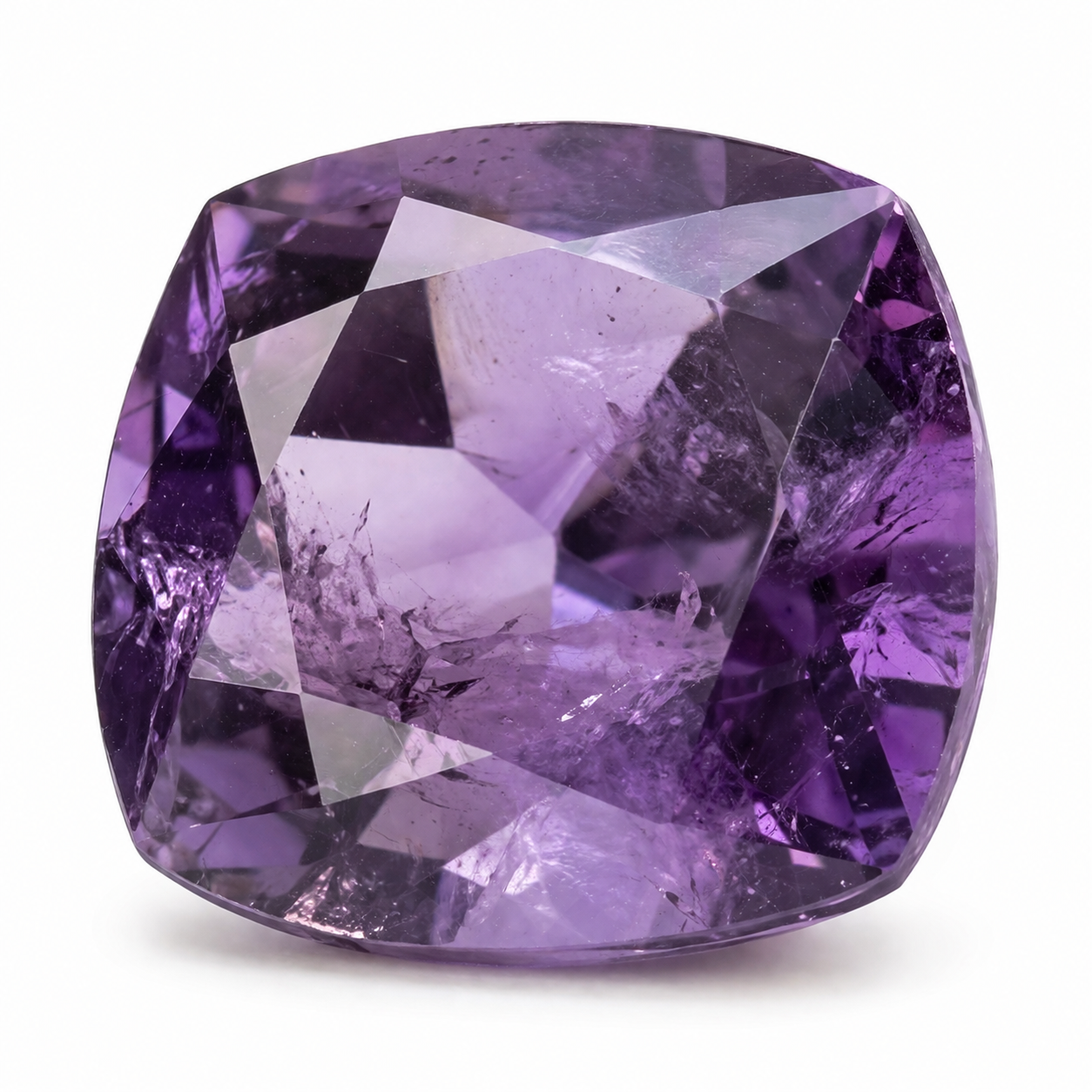
Mineral species: Quartz
Mineral group: Quartz group
Chemical formula: Silicon dioxide (SiO2)
Mohs hardness: 7
Crystal system: Trigonal
Lustre: vitreous
Transparency: transparent
Streak: White to colorless (species-dependent)
Cleavage: Species-dependent cleavage behavior
Fracture: Conchoidal to uneven
Specific gravity: Species-dependent range; see cited references
Refractive index: Species-dependent range; see cited references
Optical phenomena: Colour Zoning (common)
Colour range: Yellow, Purple, Violet
Common inclusions: Natural growth features, inclusions, and fracture signatures typical of the species/material
Geological environment: Formation in igneous, metamorphic, or sedimentary settings depends on species/material type
Principal mining regions: Brazil (Rio Grande do Sul), Uruguay (Artigas), Zambia, Bolivia, Madagascar
Important commercial sources: Brazil and Uruguay are major commercial sources; additional production from Zambia, Bolivia, and Madagascar
Historical significance: Documented use in gem, ornamental, or collector contexts.
Common treatments: Treatment practices vary by market and species; disclosure is required when present.
Synthetic or imitation forms: Synthetic and imitation products may be present depending on species/material category.
Common look-alikes: citrine, jasper, agate
Jewellery uses: Amethyst is used chiefly for Often best in pendants, earrings, collector cuts, and occasional-wear rings that showcase colour without unnecessary risk.. In the trade it is commonly fashioned as faceted stones, calibrated cuts, and higher-clarity collector pieces, with Mohs hardness 7 guiding suitable jewellery applications.
Care recommendations: Clean with warm water and mild soap; avoid extended exposure to direct sunlight for dyed varieties.