

Gemstone profile and identification guide
Ice Quartz
Ice quartz is a trade name for quartz with frosted or crackled internal appearance.
Gemstone profile and identification guide
Ice quartz is a trade name for quartz with frosted or crackled internal appearance.
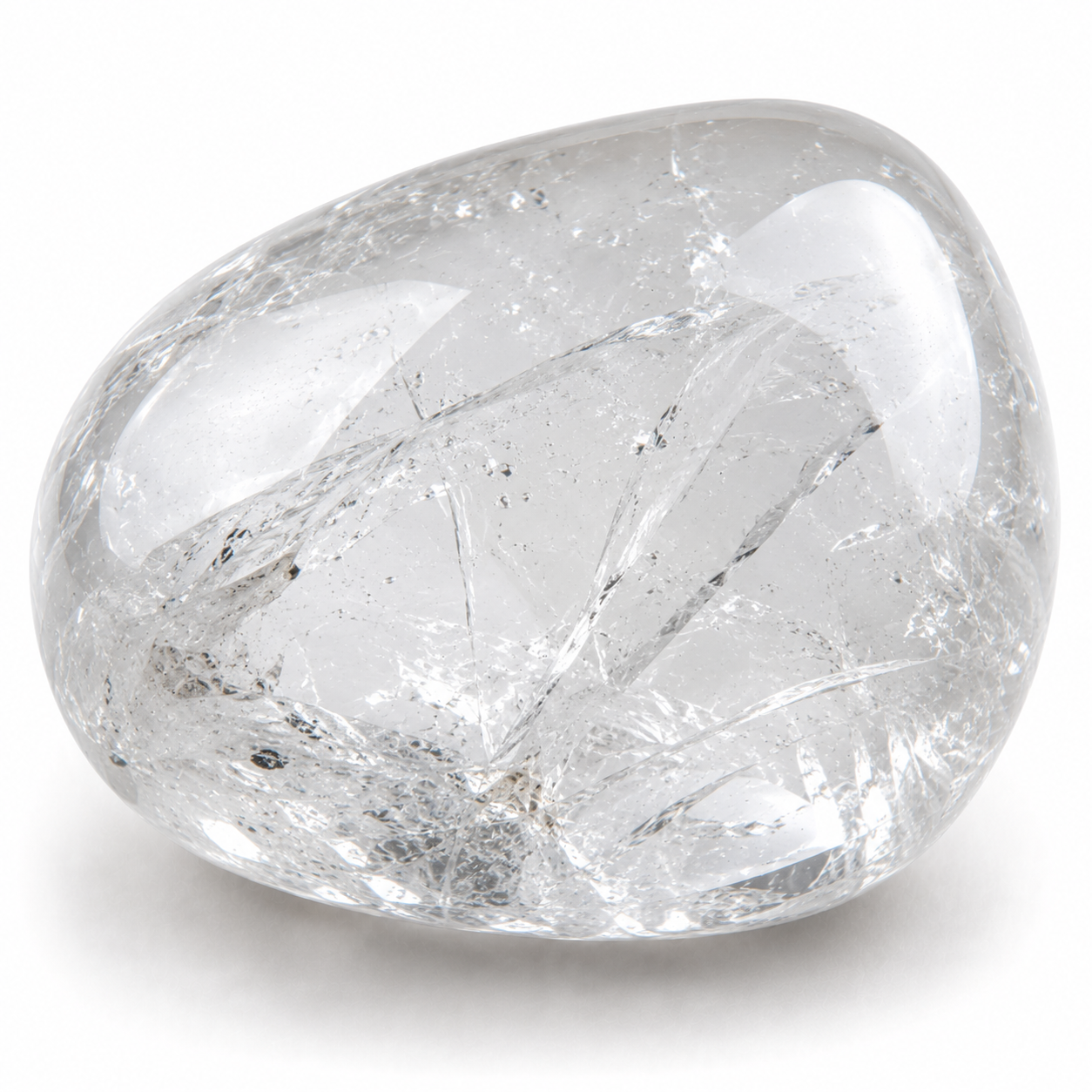
Ice quartz is a trade name for quartz with frosted or crackled internal appearance.
Did you know? Many ice quartz products in retail are treated to intensify crackled appearance.
Use this profile as a collector reference and educational guide for quick on-page comparison, then validate with the interactive identification system.
Name: Ice Quartz
Scientific classification: Silicate (Quartz Trade Descriptor)
Hardness: 7 Mohs
Transparency: translucent
Lustre: vitreous
Crystal system: Trigonal
Primary colour: Colorless
Secondary colour: Frosty
Colour family: Whites & Neutrals
Assess for crackle patterns and treatment indicators; name alone is not species-diagnostic.
Status: verified-core-fields
Reference priority: GIA, Gem-A, Mindat, International Gem Society
Core identity, locality, and physical-property fields reviewed against standard gemological references.
Trade-name entries include conservative composition/treatment disclosures where needed.
Hardness category: hard
Hardness value: 7 Mohs
Chemical composition: Silicon dioxide (SiO2)
Crystal system: Trigonal
Common locations: Quartz-producing regions and treatment centers
Learn more: Gem-A gemstone education resources.
Quartz with icy, frosted, or crackled appearance sold under ice quartz trade name.
Optical effects: Crackle/Frosted Visual Effect
Mineral species: Quartz trade descriptor material
Mineral group: Quartz group
Chemical formula: Silicon dioxide (SiO2)
Mohs hardness: 7
Crystal system: Trigonal
Lustre: vitreous
Transparency: translucent
Streak: White
Cleavage: None
Fracture: Conchoidal
Specific gravity: 2.65
Refractive index: 1.544-1.553
Optical phenomena: Crackle/frosted visual effect
Colour range: Colorless to white/frosty
Common inclusions: Fracture networks, fluid inclusions
Geological environment: Natural hydrothermal quartz; some products post-treated
Principal mining regions: Quartz-producing regions and treatment centers
Important commercial sources: Ice quartz is a trade descriptor; products may be natural crackled quartz or treated quartz
Historical significance: Modern retail trade descriptor category.
Common treatments: Thermal shock crackling and dyeing may occur.
Synthetic or imitation forms: Glass crackle imitations are common.
Common look-alikes: Crackle glass, synthetic quartz
Jewellery uses: Used in beads, decorative crystals, and fashion jewellery.
Care recommendations: Quartz core is durable, but heavily crackled material may be brittle; avoid impact.
Cross-check profile data with GIA Gem Encyclopedia and Mindat entry for Ice Quartz.
May be natural included quartz or treated/crackled quartz depending on product origin.
Ice quartz is a trade descriptor; products may be natural crackled quartz or treated quartz
Best for: Used in beads, decorative crystals, and fashion jewellery.
Ideal uses: Decorative pieces where icy appearance is desired.
Quartz core is durable, but heavily crackled material may be brittle; avoid impact.
Need another candidate? Use advanced gemstone search or return to the identification guide.
Compare hardness (7 Mohs), crystal system (Trigonal), colour profile, and lustre (vitreous) with your sample. Then cross-check related gemstones listed above.
Quartz with icy, frosted, or crackled appearance sold under ice quartz trade name.
Decorative pieces where icy appearance is desired.. For maintenance, follow the care guidance in this profile.
GIA: general gemstone identity (reviewed) - Batch 06 factual verification pass.
Gem-A: gemological terminology and testing references (reviewed) - Batch 06 factual verification pass.
Mindat: mineral species and principal localities (reviewed) - Batch 06 factual verification pass.
International Gem Society: gem trade context and treatment overview (reviewed) - Batch 06 factual verification pass.