

Gemstone profile and identification guide
Akoya Pearl
Akoya pearls are marine cultured pearls known for high lustre, round shape, and white to cream body colour with overtones.
Gemstone profile and identification guide
Akoya pearls are marine cultured pearls known for high lustre, round shape, and white to cream body colour with overtones.
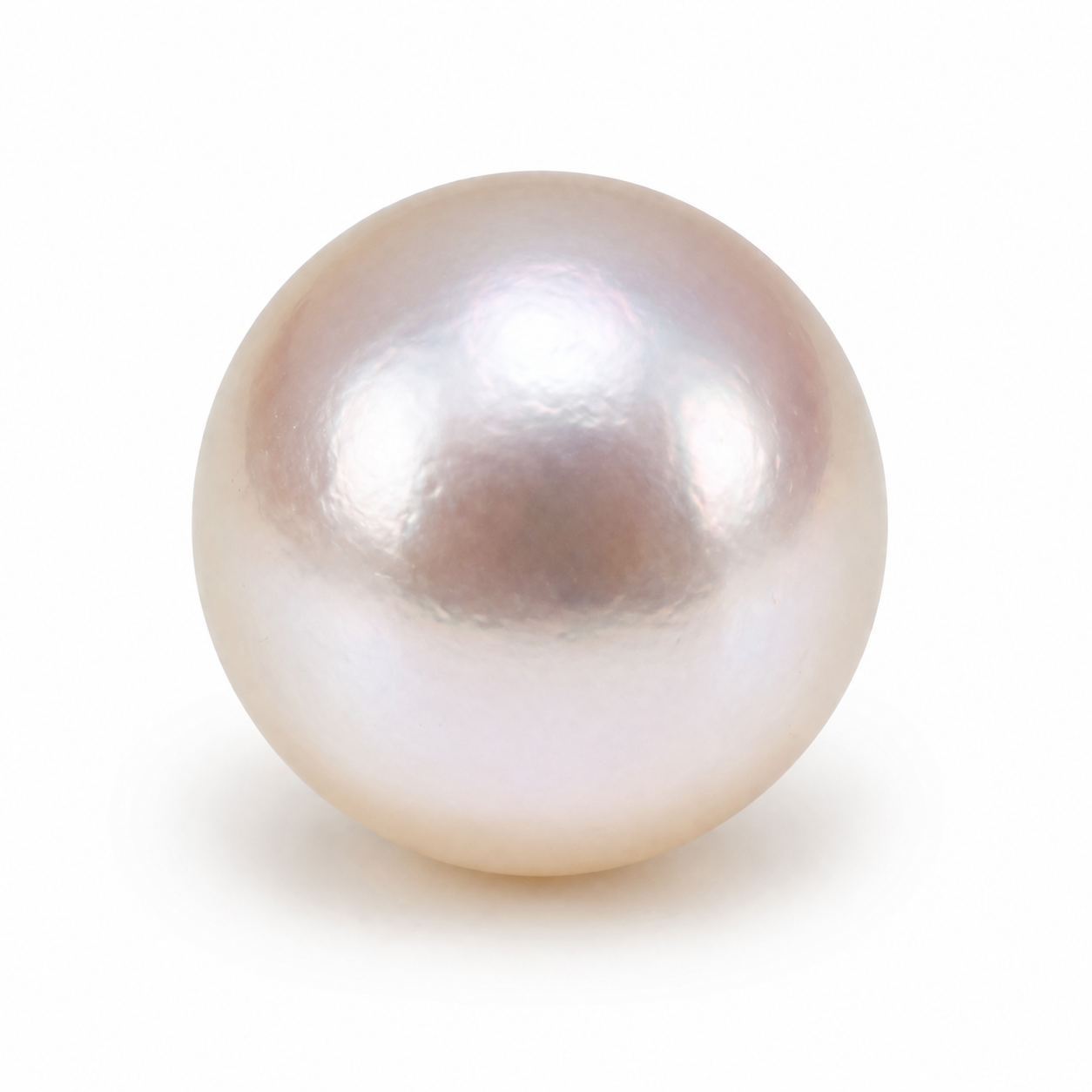
Akoya pearls are marine cultured pearls known for high lustre, round shape, and white to cream body colour with overtones.
Did you know? Commercial cultured Akoya pearl production was pioneered in Japan in the early 20th century.
Use this profile as a collector reference and educational guide for quick on-page comparison, then validate with the interactive identification system.
Name: Akoya Pearl
Scientific classification: Organic Gem Material (Cultured Saltwater Pearl)
Hardness: 3 Mohs
Transparency: opaque
Lustre: pearly
Crystal system: Orthorhombic microcrystalline aragonite aggregate
Primary colour: White
Secondary colour: Cream
Colour family: Whites & Neutrals
Distinguished by nacre orient, drill-hole structure, and cultured-pearl internal architecture under imaging.
Status: verified-core-fields
Reference priority: GIA, Gem-A, Mindat, International Gem Society
Core identity, locality, and physical-property fields reviewed against standard gemological references.
Values are reported as practical gemological ranges where appropriate.
Hardness category: soft
Hardness value: 3 Mohs
Chemical composition: Calcium carbonate (aragonite) with conchiolin
Crystal system: Orthorhombic microcrystalline aragonite aggregate
Common locations: Japan, China, Vietnam (marine cultured production)
Learn more: Gem-A gemstone education resources.
Usually white to cream with rose, silver, or greenish overtones and strong lustre.
Optical effects: Orient
Mineral species: Biogenic aragonite-conchiolin aggregate
Mineral group: Organic gem material
Chemical formula: Calcium carbonate (aragonite) with conchiolin
Mohs hardness: 3
Crystal system: Orthorhombic microcrystalline aragonite aggregate
Lustre: pearly
Transparency: opaque
Streak: White
Cleavage: Not applicable in organic aggregate
Fracture: Uneven
Specific gravity: 2.60-2.85
Refractive index: 1.53-1.69 (spot reading commonly near 1.53)
Optical phenomena: Orient and nacre lustre
Colour range: White to cream with pink, silver, or green overtones
Common inclusions: Nacre growth marks, drill-related features, natural surface blemishes
Geological environment: Marine aquaculture environments
Principal mining regions: Japan, China, Vietnam (marine cultured production)
Important commercial sources: Classic Akoya cultured pearls are historically associated with Japan, with current production also in China and Vietnam
Historical significance: A cornerstone of modern cultured pearl history and global pearl jewellery markets.
Common treatments: Bleaching, pinking, and lustre enhancement are common trade treatments.
Synthetic or imitation forms: Shell pearls, glass pearls, and coated plastic imitations are widespread.
Common look-alikes: Imitation glass pearls, shell pearls, freshwater pearls
Jewellery uses: Used in necklaces, stud earrings, bracelets, and fine pearl jewellery sets.
Care recommendations: Very soft and sensitive to chemicals; wipe after wear and store separately from harder gems.
Cross-check profile data with GIA Gem Encyclopedia and Mindat entry for Akoya Pearl.
Produced by nacre secretion around an implanted nucleus in marine oysters (Pinctada species).
Classic Akoya cultured pearls are historically associated with Japan, with current production also in China and Vietnam
Best for: Used in necklaces, stud earrings, bracelets, and fine pearl jewellery sets.
Ideal uses: Classic pearl strands and formal jewellery requiring high lustre and matching.
Very soft and sensitive to chemicals; wipe after wear and store separately from harder gems.
Need another candidate? Use advanced gemstone search or return to the identification guide.
Compare hardness (3 Mohs), crystal system (Orthorhombic microcrystalline aragonite aggregate), colour profile, and lustre (pearly) with your sample. Then cross-check related gemstones listed above.
Usually white to cream with rose, silver, or greenish overtones and strong lustre.
Classic pearl strands and formal jewellery requiring high lustre and matching.. For maintenance, follow the care guidance in this profile.
GIA: general gemstone identity (reviewed) - Batch 02 factual verification pass.
Gem-A: gemological terminology and testing references (reviewed) - Batch 02 factual verification pass.
Mindat: mineral species and principal localities (reviewed) - Batch 02 factual verification pass.
International Gem Society: gem trade context and treatment overview (reviewed) - Batch 02 factual verification pass.