
Gemstone profile and identification guide
Coral
Gem coral is an organic biogenic material composed of coral skeleton polished for ornamental use.
Gemstone profile and identification guide
Gem coral is an organic biogenic material composed of coral skeleton polished for ornamental use.
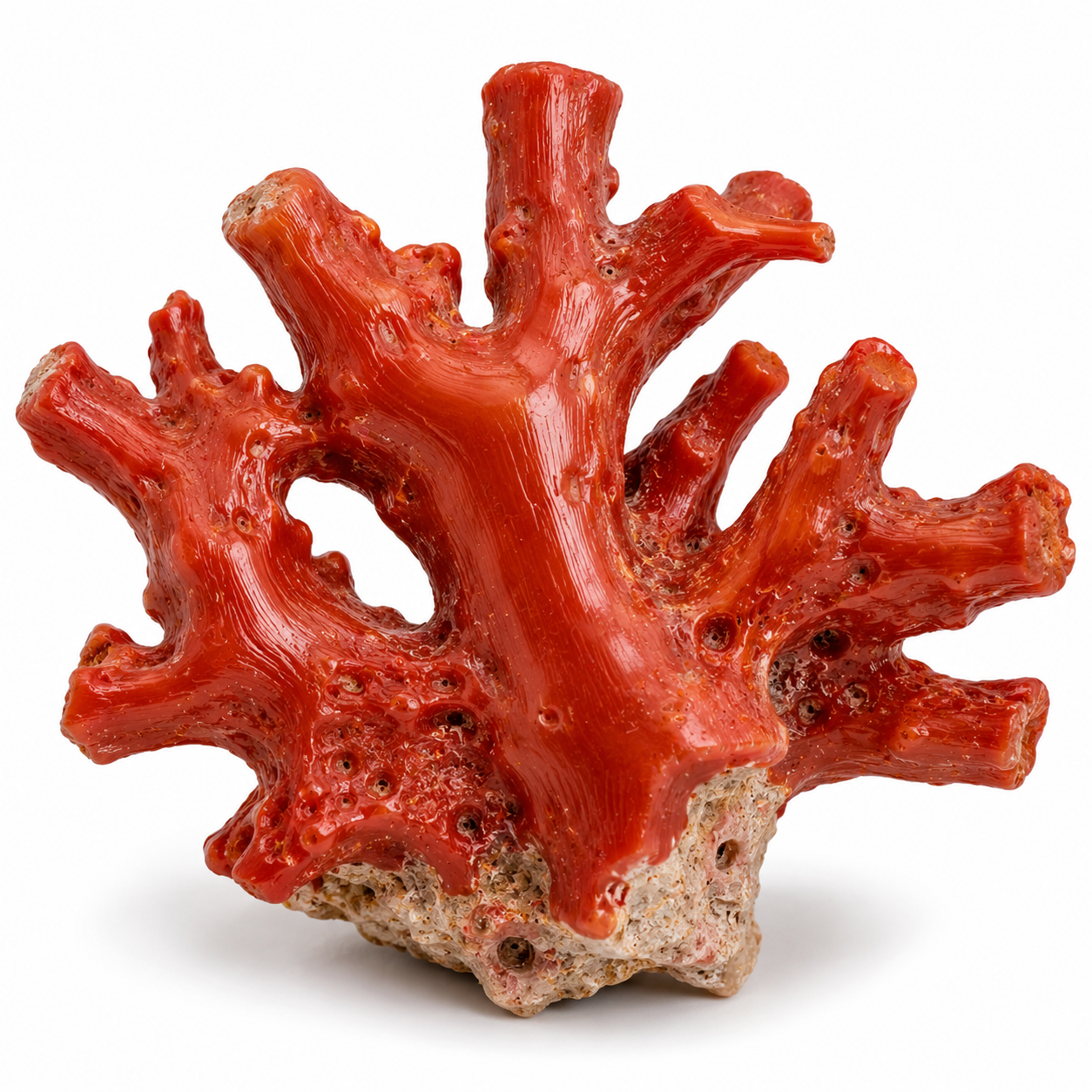
Gem coral is an organic biogenic material composed of coral skeleton polished for ornamental use.
Did you know? Many coral species used in jewellery are regulated; legal sourcing and documentation are important.
Use this profile as a collector reference and educational guide for quick on-page comparison, then validate with the interactive identification system.
Name: Coral
Scientific classification: Organic Gem Material (Biogenic Coral)
Hardness: 3.5 Mohs
Transparency: opaque
Lustre: waxy
Crystal system: Orthorhombic microstructure (aragonitic skeleton material)
Primary colour: Red
Secondary colour: Pink
Colour family: Reds
Growth structure, surface texture under magnification, and low hardness help separate natural coral from imitations.
Status: verified-core-fields
Reference priority: GIA, Gem-A, Mindat, International Gem Society
Core identity, locality, and physical-property fields reviewed against standard gemological references.
Values are reported as practical gemological ranges where appropriate.
Hardness category: soft
Hardness value: 3.5 Mohs
Chemical composition: Calcium carbonate (primarily aragonite/calcite) with organic matter
Crystal system: Orthorhombic microstructure (aragonitic skeleton material)
Common locations: Mediterranean Sea, Japan, Taiwan waters, Pacific coral regions
Learn more: Gem-A gemstone education resources.
Organic skeletal material used as gem coral in red, pink, orange, and white hues.
Optical effects: None specified in the current dataset.
Mineral species: Biogenic coral skeleton material
Mineral group: Organic gem material
Chemical formula: Calcium carbonate (primarily aragonite/calcite) with organic matter
Mohs hardness: 3.5
Crystal system: Orthorhombic microstructure (aragonitic skeleton material)
Lustre: waxy
Transparency: opaque
Streak: White
Cleavage: Not applicable in organic aggregate
Fracture: Splintery to uneven
Specific gravity: 2.60-2.70
Refractive index: 1.48-1.66 (spot values vary with structure)
Optical phenomena: None typically diagnostic
Colour range: Red, pink, orange, white
Common inclusions: Growth lines, pores, organic channels
Geological environment: Marine biogenic growth environments
Principal mining regions: Mediterranean Sea, Japan, Taiwan waters, Pacific coral regions
Important commercial sources: Precious coral in jewellery is historically associated with Mediterranean and Japanese sources, with strict regulation in many regions
Historical significance: Extensively used in Mediterranean, Asian, and global jewellery traditions.
Common treatments: Dyeing, bleaching, impregnation, and reconstruction are common.
Synthetic or imitation forms: Dyed bone, shell, plastic, and resin composites are common imitations.
Common look-alikes: Dyed calcite, dyed shell, plastic imitation coral
Jewellery uses: Used in beads, cabochons, carvings, and heritage jewellery pieces.
Care recommendations: Soft and chemically sensitive; avoid acids, perfumes, and high heat. Clean only with damp soft cloth.
Cross-check profile data with GIA Gem Encyclopedia and Mindat entry for Coral.
Forms through biogenic skeletal growth of colonial marine organisms in suitable reef or deep-water environments.
Precious coral in jewellery is historically associated with Mediterranean and Japanese sources, with strict regulation in many regions
Best for: Used in beads, cabochons, carvings, and heritage jewellery pieces.
Ideal uses: Low-impact jewellery and collector carved material.
Soft and chemically sensitive; avoid acids, perfumes, and high heat. Clean only with damp soft cloth.
Need another candidate? Use advanced gemstone search or return to the identification guide.
Compare hardness (3.5 Mohs), crystal system (Orthorhombic microstructure (aragonitic skeleton material)), colour profile, and lustre (waxy) with your sample. Then cross-check related gemstones listed above.
Organic skeletal material used as gem coral in red, pink, orange, and white hues.
Low-impact jewellery and collector carved material.. For maintenance, follow the care guidance in this profile.
GIA: general gemstone identity (reviewed) - Batch 02 factual verification pass.
Gem-A: gemological terminology and testing references (reviewed) - Batch 02 factual verification pass.
Mindat: mineral species and principal localities (reviewed) - Batch 02 factual verification pass.
International Gem Society: gem trade context and treatment overview (reviewed) - Batch 02 factual verification pass.