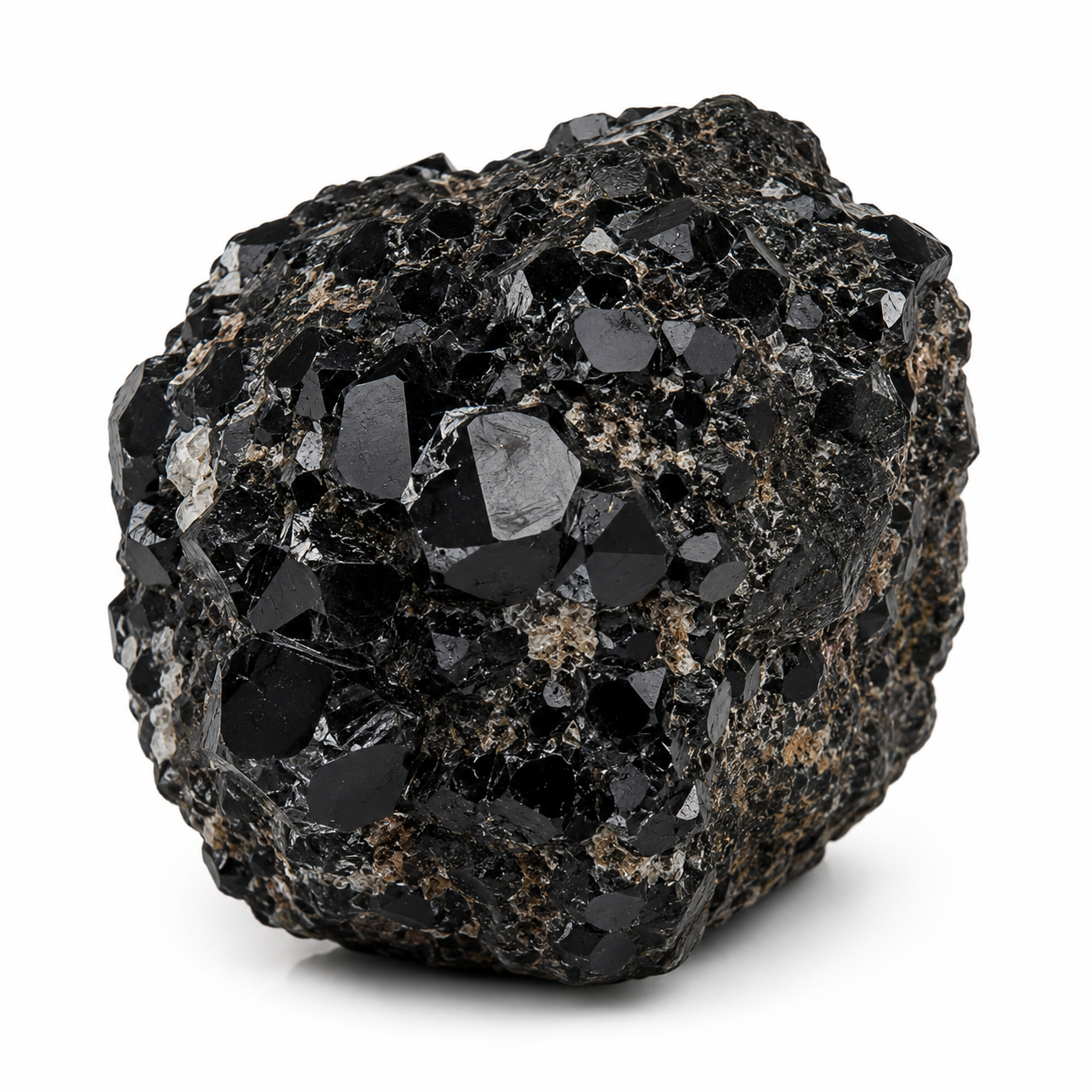
Mineral species: Spinel
Mineral group: Spinel group
Chemical formula: Magnesium aluminum oxide (MgAl2O4)
Mohs hardness: 8
Crystal system: Isometric (Cubic)
Lustre: vitreous
Transparency: transparent
Streak: White
Cleavage: None
Fracture: Conchoidal to uneven
Specific gravity: 3.58-3.63
Refractive index: 1.718
Optical phenomena: Colour Change (rare)
Colour range: Black
Common inclusions: Octahedral crystals, healed fissures, and fingerprint inclusions
Geological environment: Black Spinel occurs in Metamorphic marbles and alluvial deposits derived from metamorphic and igneous sources. Its Isometric (Cubic) structure reflects the pressure-temperature conditions of those host rocks, with notable occurrences in Myanmar, Sri Lanka, Tanzania (Mahenge), Vietnam, Tajikistan.
Principal mining regions: Myanmar, Sri Lanka, Tanzania (Mahenge), Vietnam, Tajikistan
Important commercial sources: Key gem spinel sources include Myanmar, Sri Lanka, Tanzania, and Vietnam
Historical significance: Spinel has a long gem history and was historically confused with ruby in crown jewels.
Common treatments: Generally untreated, though occasional heating may be reported in specific lots.
Synthetic or imitation forms: Flame-fusion synthetic spinel and glass imitations are common.
Common look-alikes: sapphire, ruby, spinel
Jewellery uses: Black Spinel is used chiefly for A strong candidate for rings and other high-contact jewellery when overall cut quality is sound.. In the trade it is commonly fashioned as faceted stones, calibrated cuts, and higher-clarity collector pieces, with Mohs hardness 8 guiding suitable jewellery applications.
Care recommendations: Black Spinel should be cleaned with lukewarm water, mild soap, and a soft brush. At Mohs 8 in the Isometric (Cubic) system, avoid steam cleaners, harsh chemicals, and high-impact wear. Store separately from harder gems to minimise abrasion and edge wear.