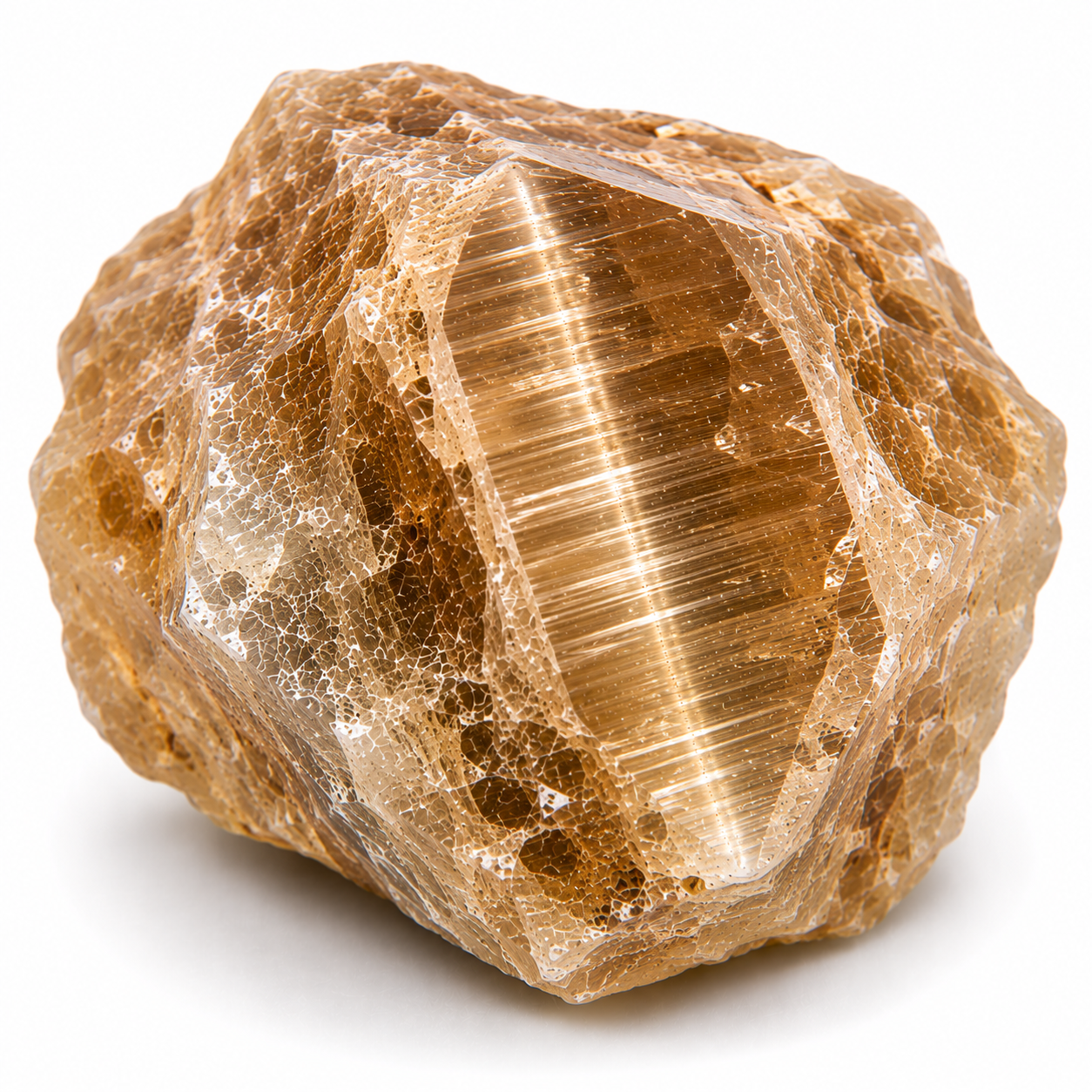
Mineral species: Topaz
Mineral group: Topaz group
Chemical formula: Aluminum fluorine hydroxyl silicate [Al2SiO4(F,OH)2]
Mohs hardness: 8
Crystal system: Orthorhombic
Lustre: vitreous
Transparency: transparent
Streak: White
Cleavage: Perfect basal cleavage
Fracture: Subconchoidal to uneven
Specific gravity: 3.49-3.57
Refractive index: 1.61-1.64
Optical phenomena: None commonly reported
Colour range: Blue, Champagne, Gold, Yellow
Common inclusions: Liquid inclusions, fractures, and growth zoning
Geological environment: Champagne Topaz occurs in Granitic pegmatites, rhyolitic cavities, and hydrothermal environments. Its Orthorhombic structure reflects the pressure-temperature conditions of those host rocks, with notable occurrences in Brazil (Minas Gerais), Pakistan, Russia, Nigeria, Sri Lanka.
Principal mining regions: Brazil (Minas Gerais), Pakistan, Russia, Nigeria, Sri Lanka
Important commercial sources: Brazil is the principal producer of gem topaz, with additional sources in Pakistan, Russia, and Nigeria
Historical significance: Topaz has been used in jewelry for centuries and remains a major faceted gemstone species.
Common treatments: Irradiation and heat are common for blue topaz; coatings are used for products such as mystic topaz.
Synthetic or imitation forms: Synthetic substitutes and glass imitations are available in the market.
Common look-alikes: topaz, moonstone, peridot
Jewellery uses: Champagne Topaz is used chiefly for Particularly useful where durability matters alongside colour, clarity, or optical performance.. In the trade it is commonly fashioned as faceted stones, calibrated cuts, and higher-clarity collector pieces, with Mohs hardness 8 guiding suitable jewellery applications.
Care recommendations: Champagne Topaz should be cleaned with lukewarm water, mild soap, and a soft brush. At Mohs 8 in the Orthorhombic system, avoid steam cleaners, harsh chemicals, and high-impact wear. Protect cleavage directions from sharp knocks during wear and setting.