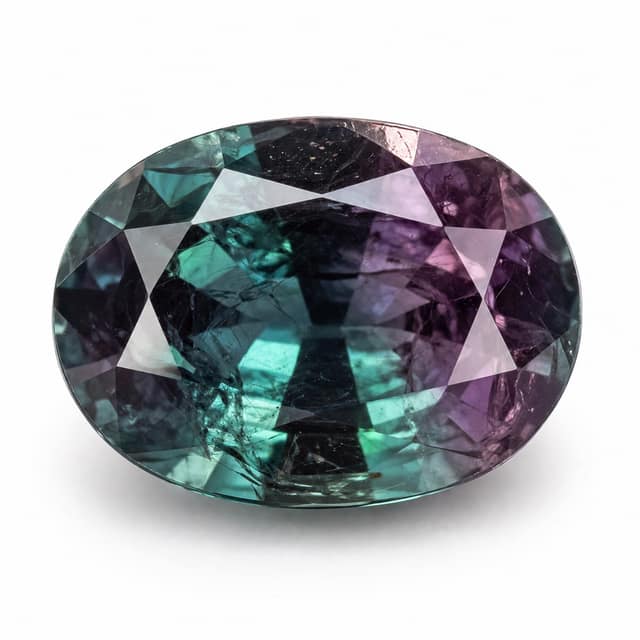
Alexandrite is the colour-change variety of chrysoberyl, typically shifting from green to bluish green in daylight to red to purplish red under incandescent light. Commercial alexandrite is sourced mainly from Brazil, Sri Lanka, and East Africa, with the Russian Urals important historically.
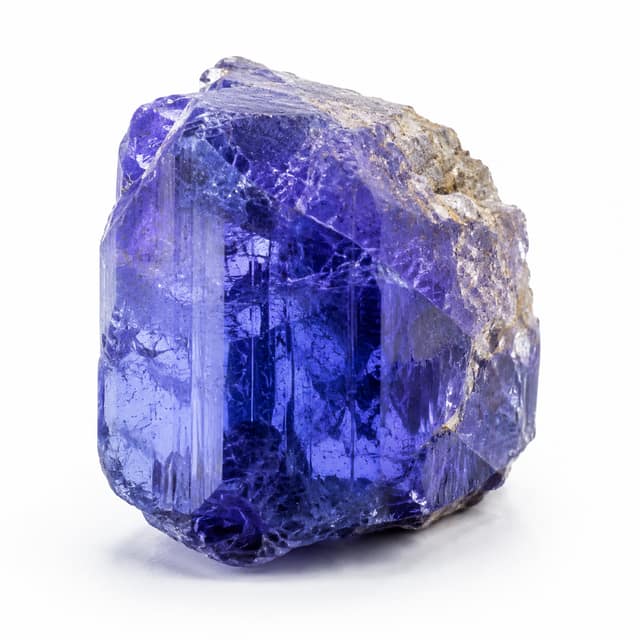
Tanzanite is one of the few gemstones whose identity is closely tied to a single modern locality. Its blue-to-violet colour and pleochroic character give it an instantly contemporary profile among transparent jewellery stones.
Red Beryl is often discussed with one eye on colour and the other on where the material comes from. Collectors and lapidaries comparing similar stones often come to it for different reasons, but identification still comes back to red body colour, 7.5 Mohs hardness, and vitreous lustre.
Padparadscha Sapphire sits among the more resilient gem materials used for jewellery, which shapes both how it wears and how it is collected. That combination of blue body colour, 9 Mohs hardness, and vitreous lustre is what usually makes it recognisable in practice. The secondary sapphire blue note often matters more than people expect when separating it from lookalikes.