

Gemstone profile and identification guide
Blue Goldstone
Blue goldstone is a man-made glitter glass used as an ornamental jewellery material.
Gemstone profile and identification guide
Blue goldstone is a man-made glitter glass used as an ornamental jewellery material.
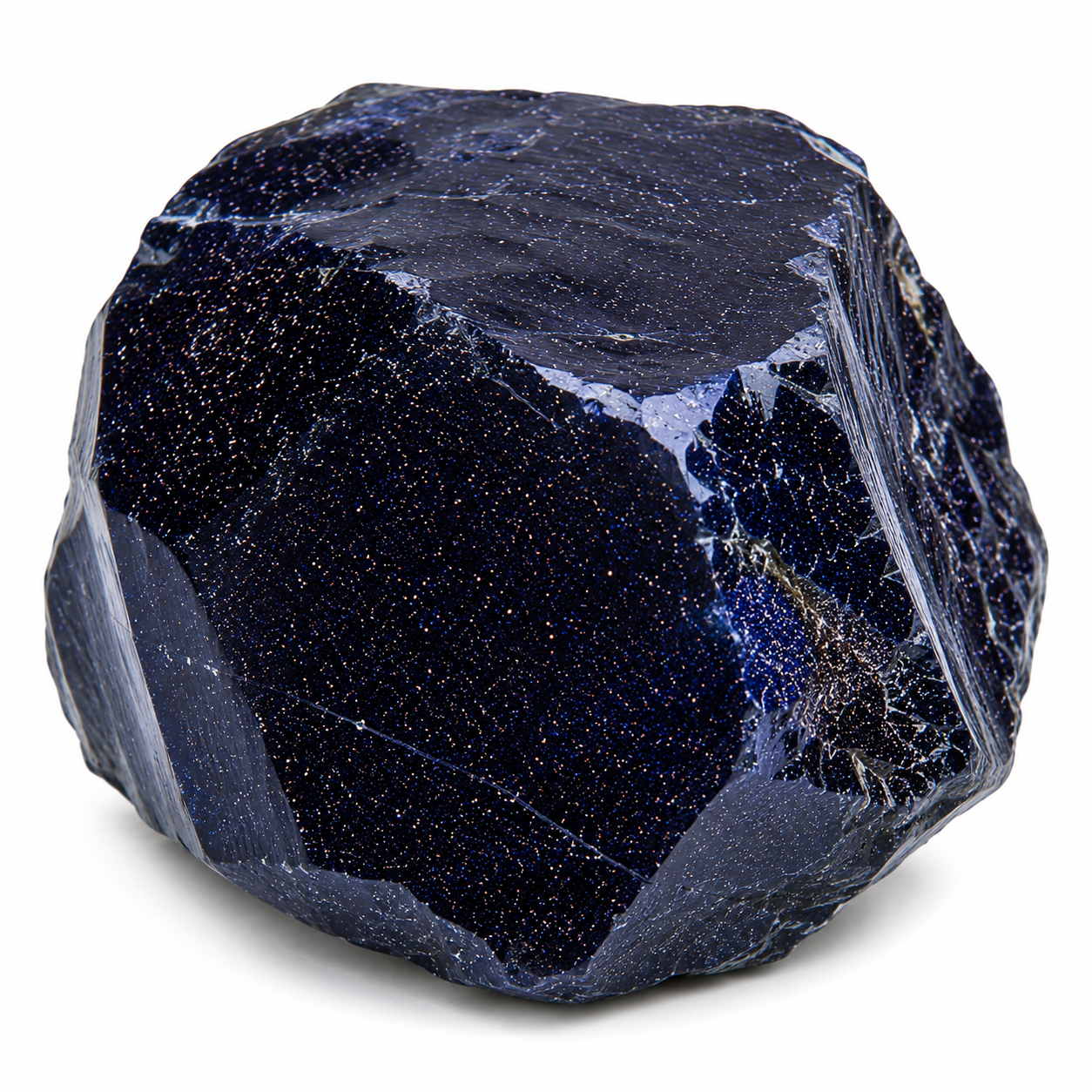
Blue goldstone is a man-made glitter glass used as an ornamental jewellery material.
Did you know? Despite its name, goldstone is not a natural stone.
Use this profile as a collector reference and educational guide for quick on-page comparison, then validate with the interactive identification system.
Name: Blue Goldstone
Scientific classification: Man-made Glass Composite (Goldstone Variety)
Hardness: 5.5 Mohs
Transparency: opaque
Lustre: vitreous with metallic sparkle
Crystal system: Amorphous glass
Primary colour: Deep Blue
Secondary colour: Sparkling
Colour family: Blues
Uniform glitter in glassy matrix and rounded bubble textures indicate manufactured origin.
Status: verified-core-fields
Reference priority: GIA, Gem-A, Mindat, International Gem Society
Core identity, locality, and physical-property fields reviewed against standard gemological references.
Trade-name entries include treatment/composition disclosures where applicable.
Hardness category: medium
Hardness value: 5.5 Mohs
Chemical composition: Glass with suspended reflective particles (often copper or cobalt-related formulations)
Crystal system: Amorphous glass
Common locations: Manufactured product; produced in glassmaking centers
Learn more: Gem-A gemstone education resources.
Dark blue man-made glass with metallic sparkle inclusions.
Optical effects: Sparkle Effect
Mineral species: Manufactured glass
Mineral group: Man-made ornamental material
Chemical formula: Glass with suspended reflective particles (often copper or cobalt-related formulations)
Mohs hardness: 5.5
Crystal system: Amorphous glass
Lustre: vitreous with metallic sparkle
Transparency: opaque
Streak: White
Cleavage: None
Fracture: Conchoidal
Specific gravity: 2.4-2.8 (product dependent)
Refractive index: Approximately 1.50-1.55
Optical phenomena: Sparkle from suspended reflective particles
Colour range: Deep blue to blue-black with glitter
Common inclusions: Gas bubbles and reflective metallic crystals
Geological environment: Not applicable (manufactured)
Principal mining regions: Manufactured product; produced in glassmaking centers
Important commercial sources: Blue goldstone is manufactured, not a natural gemstone species
Historical significance: A long-standing decorative glass product in jewellery markets.
Common treatments: Manufactured from inception.
Synthetic or imitation forms: Other glitter glasses and resin composites
Common look-alikes: Aventurine glass variants, synthetic glitter composites
Jewellery uses: Used in beads, cabochons, and decorative jewellery.
Care recommendations: Avoid hard impacts and thermal shock typical for glass materials.
Cross-check profile data with GIA Gem Encyclopedia and Mindat entry for Blue Goldstone.
Produced by controlled glassmaking with suspended reflective crystalline phases.
Blue goldstone is manufactured, not a natural gemstone species
Best for: Used in beads, cabochons, and decorative jewellery.
Ideal uses: Fashion jewellery and decorative items with sparkle effect.
Avoid hard impacts and thermal shock typical for glass materials.
Need another candidate? Use advanced gemstone search or return to the identification guide.
Compare hardness (5.5 Mohs), crystal system (Amorphous glass), colour profile, and lustre (vitreous with metallic sparkle) with your sample. Then cross-check related gemstones listed above.
Dark blue man-made glass with metallic sparkle inclusions.
Fashion jewellery and decorative items with sparkle effect.. For maintenance, follow the care guidance in this profile.
GIA: general gemstone identity (reviewed) - Batch 05 factual verification pass.
Gem-A: gemological terminology and testing references (reviewed) - Batch 05 factual verification pass.
Mindat: mineral species and principal localities (reviewed) - Batch 05 factual verification pass.
International Gem Society: gem trade context and treatment overview (reviewed) - Batch 05 factual verification pass.