

Gemstone profile and identification guide
Cherry Quartz
Cherry quartz in commerce is commonly glass or treated quartz-like material sold as a decorative stone.
Gemstone profile and identification guide
Cherry quartz in commerce is commonly glass or treated quartz-like material sold as a decorative stone.
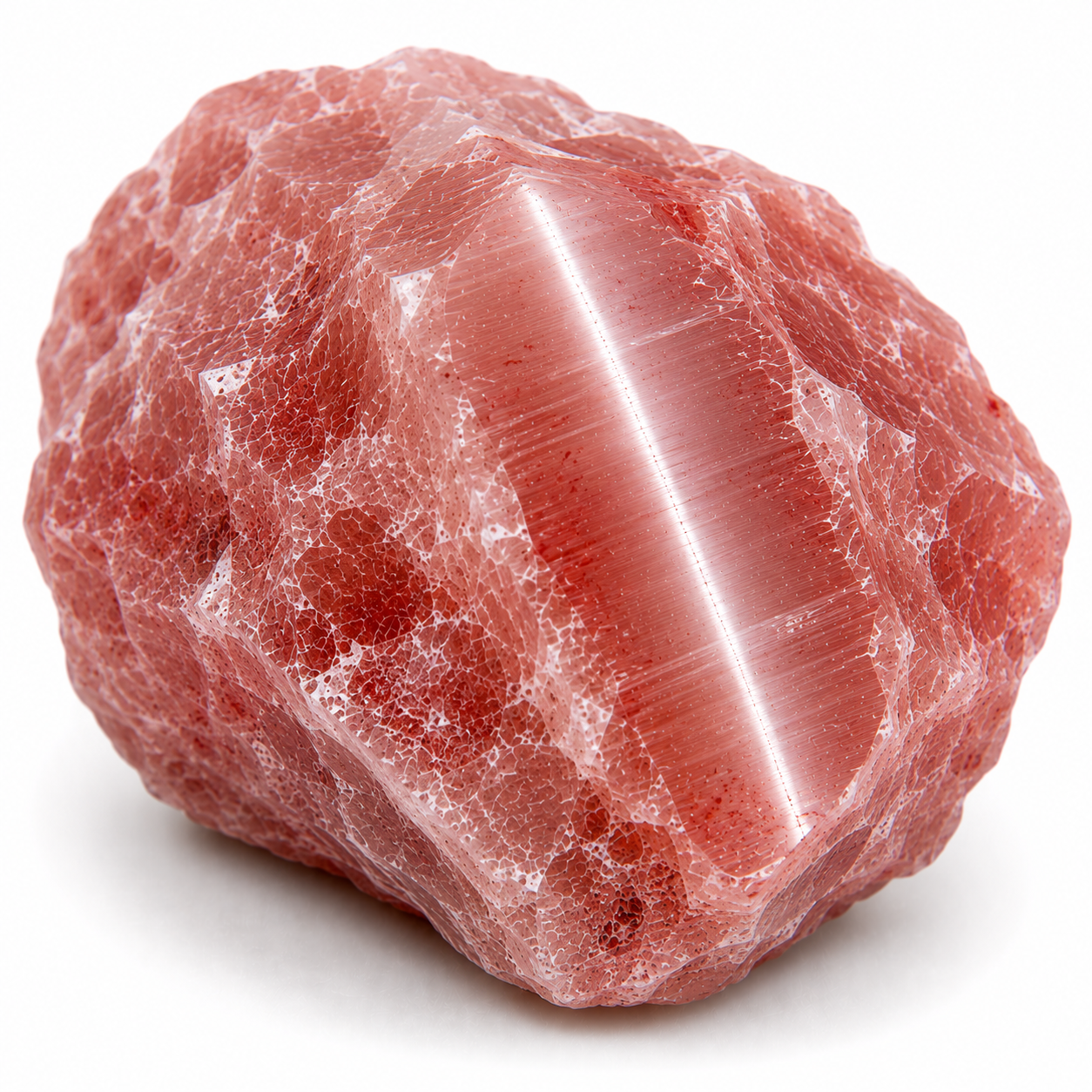
Cherry quartz in commerce is commonly glass or treated quartz-like material sold as a decorative stone.
Did you know? Trade names with fruit descriptors often describe color style, not mineral species.
Use this profile as a collector reference and educational guide for quick on-page comparison, then validate with the interactive identification system.
Name: Cherry Quartz
Scientific classification: Trade Name (Commonly Glass or Dyed Quartz Composite)
Hardness: 5.5 Mohs
Transparency: translucent
Lustre: vitreous
Crystal system: Amorphous or composite, product-dependent
Primary colour: Cherry Red
Secondary colour: Pink Red
Colour family: Reds
Uniform intense color and synthetic-style internal textures often indicate manufactured origin.
Status: verified-core-fields
Reference priority: GIA, Gem-A, Mindat, International Gem Society
Core identity, locality, and physical-property fields reviewed against standard gemological references.
Trade-name entries include treatment/composition disclosures where applicable.
Hardness category: medium
Hardness value: 5.5 Mohs
Chemical composition: Typically glass or treated silica-based material
Crystal system: Amorphous or composite, product-dependent
Common locations: Manufactured and lapidary treatment centers
Learn more: Gem-A gemstone education resources.
Vivid pink-red decorative material sold under cherry quartz trade name.
Optical effects: None specified in the current dataset.
Mineral species: Trade material (often glass or treated silica product)
Mineral group: Manufactured or treated ornamental category
Chemical formula: Typically glass or treated silica-based material
Mohs hardness: 5.5
Crystal system: Amorphous or composite, product-dependent
Lustre: vitreous
Transparency: translucent
Streak: White
Cleavage: Variable
Fracture: Conchoidal to irregular
Specific gravity: Variable
Refractive index: Variable
Optical phenomena: None typically diagnostic
Colour range: Pink-red to cherry red
Common inclusions: Bubbles, flow lines, dye concentration patterns
Geological environment: Not applicable for manufactured materials
Principal mining regions: Manufactured and lapidary treatment centers
Important commercial sources: Cherry quartz is usually a trade product category rather than a recognized natural quartz variety
Historical significance: A modern trade descriptor in fashion gemstone market.
Common treatments: Dyeing and manufacturing are common.
Synthetic or imitation forms: Multiple manufactured alternatives exist.
Common look-alikes: Dyed quartz, pink glass, resin composites
Jewellery uses: Used in fashion jewellery, beads, and carvings.
Care recommendations: Treat as decorative material; avoid abrasion and harsh chemical exposure.
Cross-check profile data with GIA Gem Encyclopedia and Mindat entry for Cherry Quartz.
Typically manufactured or color-treated, depending on product source.
Cherry quartz is usually a trade product category rather than a recognized natural quartz variety
Best for: Used in fashion jewellery, beads, and carvings.
Ideal uses: Decorative, low-impact jewellery with clear disclosure.
Treat as decorative material; avoid abrasion and harsh chemical exposure.
Need another candidate? Use advanced gemstone search or return to the identification guide.
Compare hardness (5.5 Mohs), crystal system (Amorphous or composite, product-dependent), colour profile, and lustre (vitreous) with your sample. Then cross-check related gemstones listed above.
Vivid pink-red decorative material sold under cherry quartz trade name.
Decorative, low-impact jewellery with clear disclosure.. For maintenance, follow the care guidance in this profile.
GIA: general gemstone identity (reviewed) - Batch 05 factual verification pass.
Gem-A: gemological terminology and testing references (reviewed) - Batch 05 factual verification pass.
Mindat: mineral species and principal localities (reviewed) - Batch 05 factual verification pass.
International Gem Society: gem trade context and treatment overview (reviewed) - Batch 05 factual verification pass.