

Gemstone profile and identification guide
Chrome Diopside
Chrome diopside is the vivid green chromium-bearing gem variety of diopside.
Gemstone profile and identification guide
Chrome diopside is the vivid green chromium-bearing gem variety of diopside.
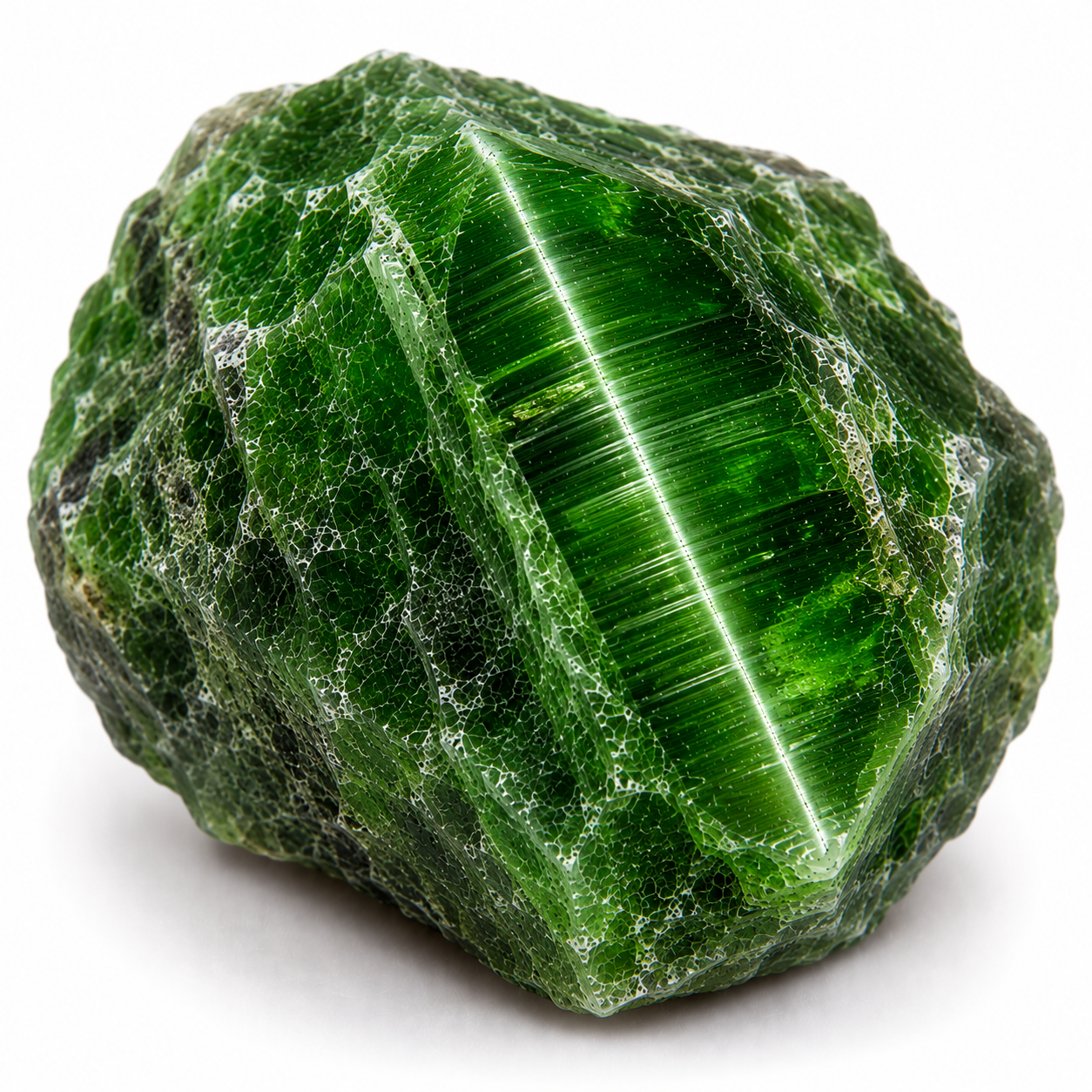
Chrome diopside is the vivid green chromium-bearing gem variety of diopside.
Did you know? Chrome diopside is often marketed as a lower-cost alternative to emerald and tsavorite.
Use this profile as a collector reference and educational guide for quick on-page comparison, then validate with the interactive identification system.
Name: Chrome Diopside
Scientific classification: Silicate (Pyroxene: Diopside Variety)
Hardness: 5.75 Mohs
Transparency: transparent
Lustre: vitreous
Crystal system: Monoclinic
Primary colour: Green
Secondary colour: Deep Green
Colour family: Greens
Strong green colour with monoclinic pyroxene optics and lower hardness than garnet are key indicators.
Status: verified-core-fields
Reference priority: GIA, Gem-A, Mindat, International Gem Society
Core identity, locality, and physical-property fields reviewed against standard gemological references.
Values are reported as practical gemological ranges where appropriate.
Hardness category: medium
Hardness value: 5.75 Mohs
Chemical composition: Calcium magnesium silicate [CaMgSi2O6] with chromium
Crystal system: Monoclinic
Common locations: Russia (Siberia), Pakistan, Afghanistan, Finland
Learn more: Gem-A gemstone education resources.
Intense chromium-rich green diopside, usually transparent in faceted gems.
Optical effects: None specified in the current dataset.
Mineral species: Diopside (chrome variety)
Mineral group: Pyroxene group
Chemical formula: Calcium magnesium silicate [CaMgSi2O6] with chromium
Mohs hardness: 5.75
Crystal system: Monoclinic
Lustre: vitreous
Transparency: transparent
Streak: White
Cleavage: Perfect in two directions
Fracture: Uneven to splintery
Specific gravity: 3.22-3.38
Refractive index: 1.66-1.73
Optical phenomena: None typically diagnostic
Colour range: Medium to deep green
Common inclusions: Crystals, needles, cleavage features
Geological environment: Metamorphic and ultramafic host rocks
Principal mining regions: Russia (Siberia), Pakistan, Afghanistan, Finland
Important commercial sources: Commercial chrome diopside is strongly associated with Siberian Russia
Historical significance: A notable modern green gem in commercial jewellery.
Common treatments: Generally untreated.
Synthetic or imitation forms: Glass and synthetic green stones can imitate it.
Common look-alikes: Tsavorite, emerald, tourmaline
Jewellery uses: Used in faceted jewellery as an affordable green gemstone option.
Care recommendations: Moderate hardness and cleavage mean it is better suited to protected settings.
Cross-check profile data with GIA Gem Encyclopedia and Mindat entry for Chrome Diopside.
Forms in metamorphic and ultramafic environments with chromium availability.
Commercial chrome diopside is strongly associated with Siberian Russia
Best for: Used in faceted jewellery as an affordable green gemstone option.
Ideal uses: Earrings, pendants, and occasional-wear rings in protective mounts.
Moderate hardness and cleavage mean it is better suited to protected settings.
Need another candidate? Use advanced gemstone search or return to the identification guide.
Compare hardness (5.75 Mohs), crystal system (Monoclinic), colour profile, and lustre (vitreous) with your sample. Then cross-check related gemstones listed above.
Intense chromium-rich green diopside, usually transparent in faceted gems.
Earrings, pendants, and occasional-wear rings in protective mounts.. For maintenance, follow the care guidance in this profile.
GIA: general gemstone identity (reviewed) - Batch 03 factual verification pass.
Gem-A: gemological terminology and testing references (reviewed) - Batch 03 factual verification pass.
Mindat: mineral species and principal localities (reviewed) - Batch 03 factual verification pass.
International Gem Society: gem trade context and treatment overview (reviewed) - Batch 03 factual verification pass.