

Gemstone profile and identification guide
Lapis Lazuli
Lapis lazuli is a lazurite-rich metamorphic rock used as a gemstone and ornamental material.
Gemstone profile and identification guide
Lapis lazuli is a lazurite-rich metamorphic rock used as a gemstone and ornamental material.
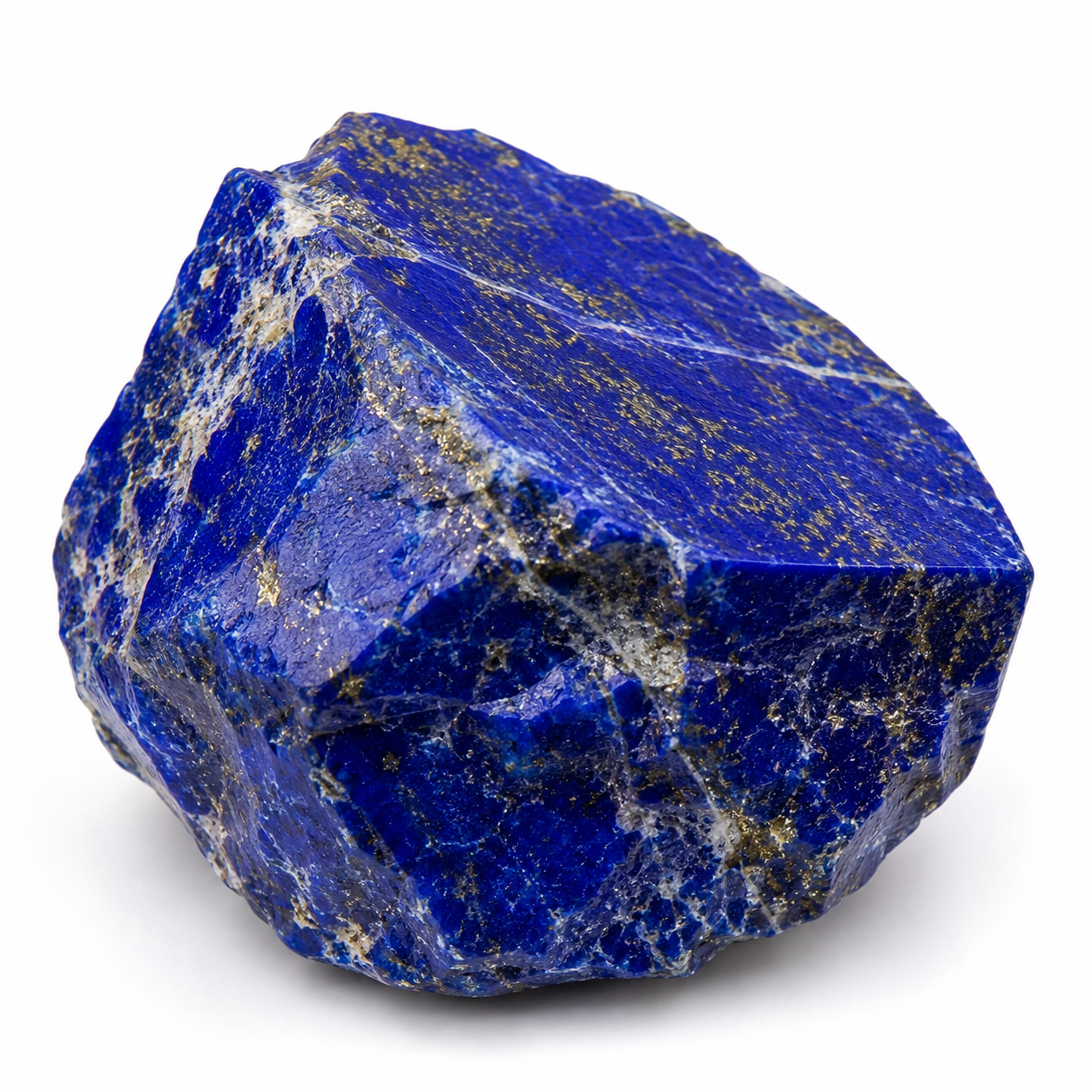
Lapis lazuli is a lazurite-rich metamorphic rock used as a gemstone and ornamental material.
Did you know? Ground lapis lazuli was the historic source of the ultramarine pigment used in paintings.
Use this profile as a collector reference and educational guide for quick on-page comparison, then validate with the interactive identification system.
Name: Lapis Lazuli
Scientific classification: Rock (Lazurite-rich Metamorphic Aggregate)
Hardness: 5.5 Mohs
Transparency: opaque
Lustre: waxy
Crystal system: Isometric (lazurite component)
Primary colour: Blue
Secondary colour: Royal Blue
Colour family: Blues
Recognized by opaque ultramarine body colour with variable pyrite and calcite; SG and hardness are lower than many transparent gems.
Status: verified-core-fields
Reference priority: GIA, Gem-A, Mindat, International Gem Society
Core identity, locality, and physical-property fields reviewed against standard gemological references.
Values are given as practical gemological ranges where appropriate.
Hardness category: medium
Hardness value: 5.5 Mohs
Chemical composition: Complex aggregate dominated by lazurite with calcite and pyrite
Crystal system: Isometric (lazurite component)
Common locations: Afghanistan (Sar-e-Sang), Chile, Russia, Pakistan, Myanmar
Learn more: Gem-A gemstone education resources.
Opaque deep blue aggregate, often with pyrite flecks and white calcite veining.
Optical effects: None specified in the current dataset.
Mineral species: Lazurite-dominant rock aggregate
Mineral group: Feldspathoid-bearing metamorphic aggregate
Chemical formula: Complex aggregate dominated by lazurite with calcite and pyrite
Mohs hardness: 5.5
Crystal system: Isometric (lazurite component)
Lustre: waxy
Transparency: opaque
Streak: Light blue to white
Cleavage: None in aggregate material
Fracture: Uneven
Specific gravity: 2.70-2.90
Refractive index: 1.50 (aggregate variable)
Optical phenomena: None typically diagnostic
Colour range: Deep blue to violet-blue with pyrite and calcite
Common inclusions: Pyrite grains, calcite veining, diopside
Geological environment: Contact-metamorphosed carbonate rocks
Principal mining regions: Afghanistan (Sar-e-Sang), Chile, Russia, Pakistan, Myanmar
Important commercial sources: Highest-value lapis is historically and currently associated with Sar-e-Sang, Afghanistan
Historical significance: Important ornamental stone and pigment source since antiquity.
Common treatments: Dyeing, waxing, and polymer impregnation are common.
Synthetic or imitation forms: Reconstructed lapis, dyed jasper, and glass imitations exist.
Common look-alikes: Sodalite, dyed howlite, synthetic blue composites
Jewellery uses: Used in cabochons, beads, carvings, inlay, and decorative objects.
Care recommendations: Relatively soft and porous; avoid acids, ultrasonic cleaning, and prolonged soaking.
Cross-check profile data with GIA Gem Encyclopedia and Mindat entry for Lapis Lazuli.
Forms by contact metamorphism of limestone where sulfur-rich fluids produce lazurite-bearing assemblages.
Highest-value lapis is historically and currently associated with Sar-e-Sang, Afghanistan
Best for: Used in cabochons, beads, carvings, inlay, and decorative objects.
Ideal uses: Cabochons, beads, and carvings where saturated blue colour is preferred over transparency.
Relatively soft and porous; avoid acids, ultrasonic cleaning, and prolonged soaking.
Need another candidate? Use advanced gemstone search or return to the identification guide.
Compare hardness (5.5 Mohs), crystal system (Isometric (lazurite component)), colour profile, and lustre (waxy) with your sample. Then cross-check related gemstones listed above.
Opaque deep blue aggregate, often with pyrite flecks and white calcite veining.
Cabochons, beads, and carvings where saturated blue colour is preferred over transparency.. For maintenance, follow the care guidance in this profile.
GIA: general gemstone identity (reviewed) - Batch 01 factual verification pass.
Gem-A: gemological terminology and testing references (reviewed) - Batch 01 factual verification pass.
Mindat: mineral species and principal localities (reviewed) - Batch 01 factual verification pass.
International Gem Society: gem trade context and treatment overview (reviewed) - Batch 01 factual verification pass.