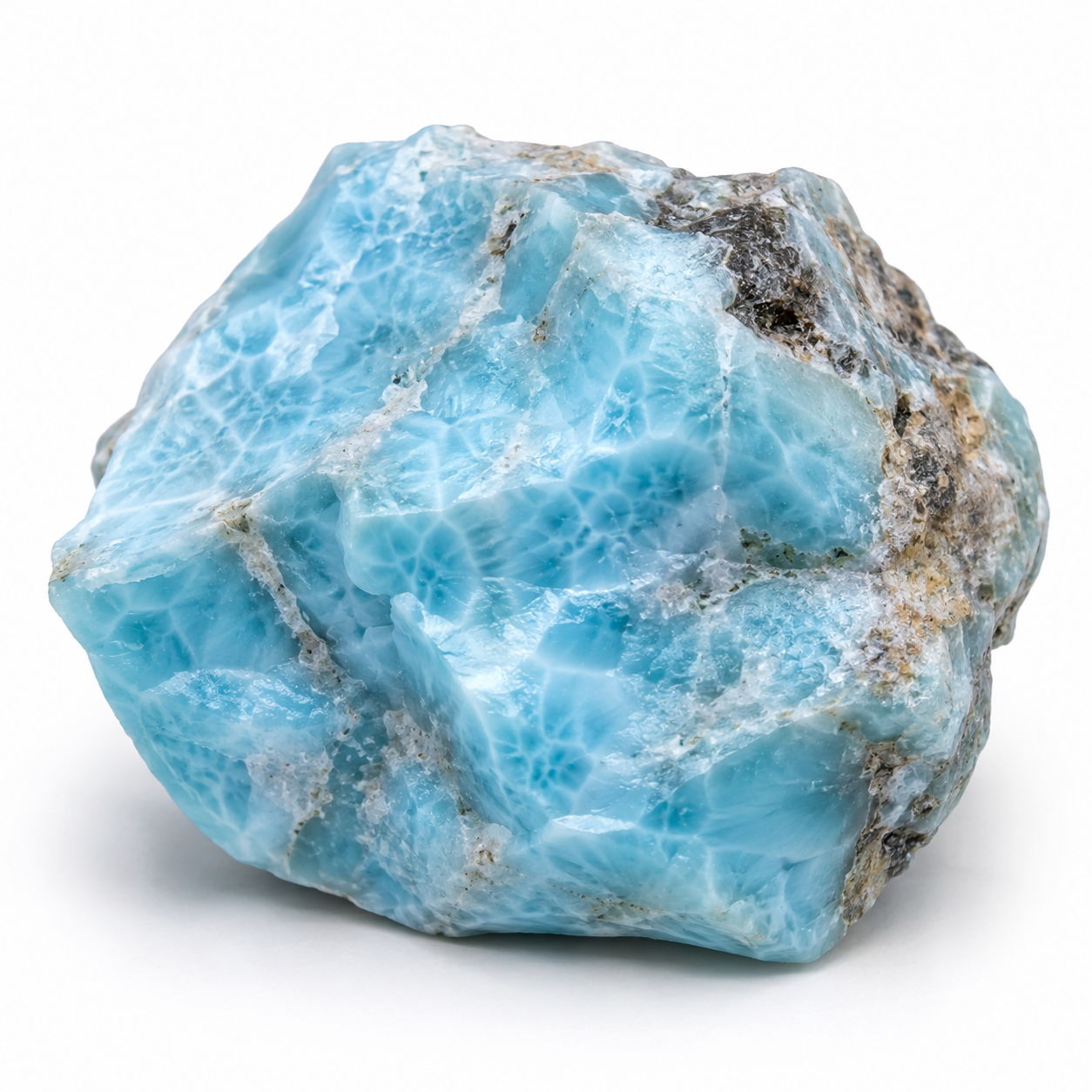
Mineral species: Pectolite (larimar variety)
Mineral group: Pectolite (inosilicate)
Chemical formula: Sodium calcium silicate hydroxide [NaCa2Si3O8(OH)]
Mohs hardness: 4.75
Crystal system: Triclinic
Lustre: vitreous to silky
Transparency: translucent to opaque
Streak: White
Cleavage: Good in one direction
Fracture: Uneven to splintery
Specific gravity: 2.70-2.90
Refractive index: 1.59-1.63
Optical phenomena: None commonly reported
Colour range: Aqua, Blue, Cyan / Blue-Green, Green, Brown
Common inclusions: Calcite veins, cavities, manganese-bearing colour zones
Geological environment: Larimar occurs in Hydrothermal alteration cavities within basaltic volcanic rocks. Its Triclinic structure reflects the pressure-temperature conditions of those host rocks, with notable occurrences in Dominican Republic (Barahona Province).
Principal mining regions: Dominican Republic (Barahona Province)
Important commercial sources: Larimar is commercially sourced only from the Dominican Republic
Historical significance: Commercially introduced in the 20th century from the Dominican Republic.
Common treatments: Stabilization and waxing are common.
Synthetic or imitation forms: No true synthetic larimar; dyed magnesite and glass are common imitations.
Common look-alikes: Dyed howlite, dyed magnesite, blue calcite
Jewellery uses: Larimar is used chiefly for A good fit for collectors and jewellers looking for visible character without needing the highest hardness category.. In the trade it is commonly fashioned as faceted stones, calibrated cuts, and higher-clarity collector pieces, with Mohs hardness 4.75 guiding suitable jewellery applications.
Care recommendations: Larimar should be cleaned with lukewarm water, mild soap, and a soft brush. At Mohs 4.75 in the Triclinic system, avoid steam cleaners, harsh chemicals, and high-impact wear. Protect cleavage directions from sharp knocks during wear and setting.