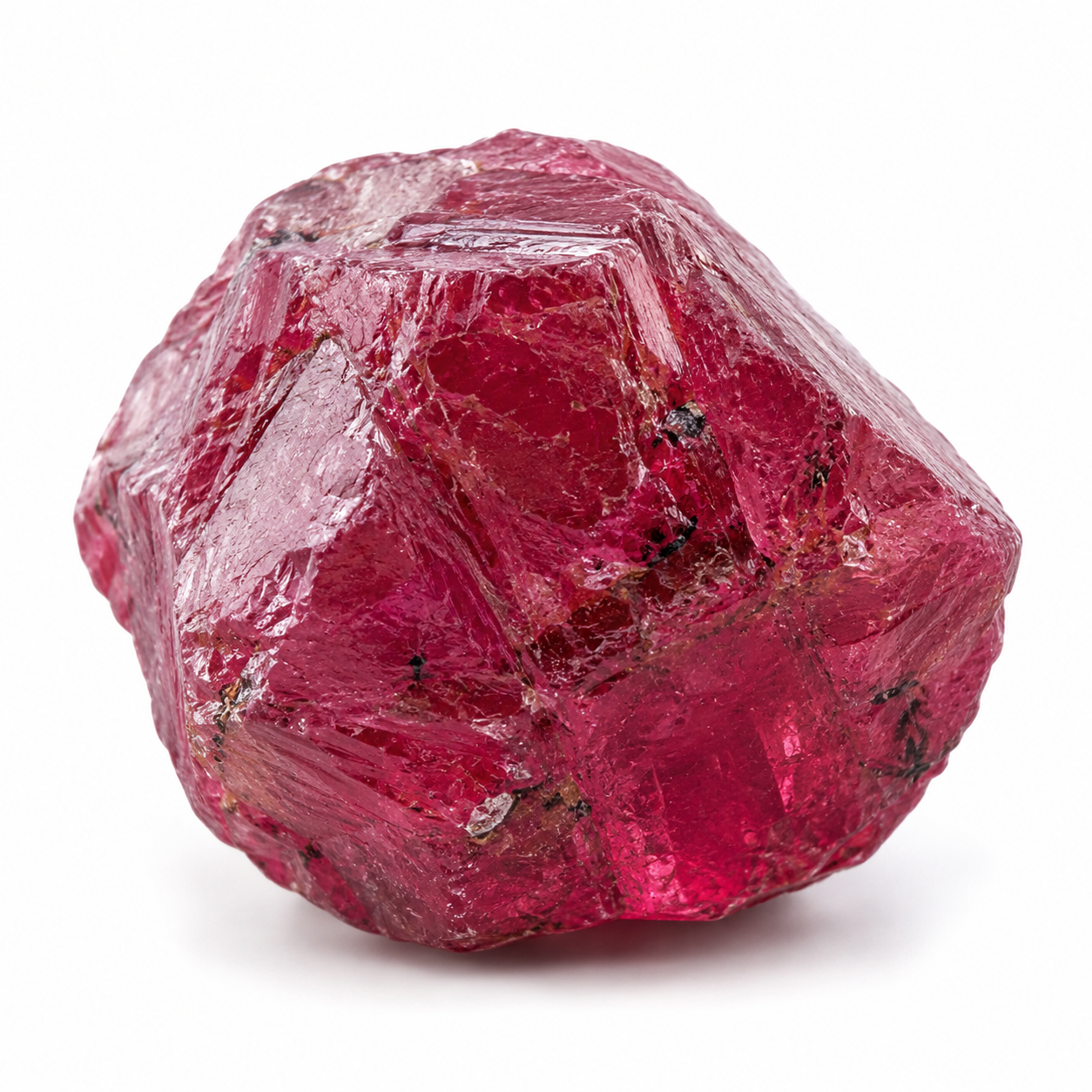
Mineral species: Corundum (ruby variety)
Mineral group: Corundum
Chemical formula: Aluminum oxide (Al2O3) with chromium
Mohs hardness: 9
Crystal system: Trigonal
Lustre: vitreous to adamantine
Transparency: transparent
Streak: White
Cleavage: No true cleavage; parting may occur
Fracture: Conchoidal to uneven
Specific gravity: 3.99-4.01
Refractive index: 1.76-1.77
Optical phenomena: Asterism (in star ruby)
Colour range: Burgundy, Red
Common inclusions: Rutile silk, crystal inclusions, and healed fractures
Geological environment: Ruby occurs in Metamorphic marbles and igneous/metamorphic deposits with alluvial concentrations. Its Trigonal structure reflects the pressure-temperature conditions of those host rocks, with notable occurrences in Mozambique, Myanmar, Madagascar, Tanzania, Thailand.
Principal mining regions: Mozambique, Myanmar, Madagascar, Tanzania, Thailand
Important commercial sources: Major modern ruby sources include Mozambique and Myanmar, with additional production from Madagascar and Tanzania
Historical significance: Ruby and sapphire are among the most historically significant and durable gem species.
Common treatments: Heat treatment is common; diffusion and fracture-filling treatments may occur and require disclosure.
Synthetic or imitation forms: Synthetic corundum (Verneuil, flux, hydrothermal) and glass imitations exist.
Common look-alikes: sapphire, spinel, pink sapphire
Jewellery uses: Ruby is used chiefly for Well suited to daily-wear jewellery, especially when cut and set to show colour or brilliance cleanly.. In the trade it is commonly fashioned as faceted stones, calibrated cuts, and higher-clarity collector pieces, with Mohs hardness 9 guiding suitable jewellery applications.
Care recommendations: Ruby should be cleaned with lukewarm water, mild soap, and a soft brush. At Mohs 9 in the Trigonal system, avoid steam cleaners, harsh chemicals, and high-impact wear. Protect cleavage directions from sharp knocks during wear and setting.